


14 Aug Why Is Home Nursing Care for Stroke Patients Important?
A stroke may make an ordinary day an emergency for a family. Post-hospitalization problems persist for the family at home. A patient may experience difficulty walking, take medications, or require assistance with bathing and eating. Difficulty swallowing meals also increases the burden. There may be concern over falling and medical emergencies.
Understanding how to care for a stroke patient can help families prepare for continued care at home. Home care is typically very attentive and handy, on the other hand. Skilled nurses often serve those who need daily care and help to monitor their current health status with regard to the instructions set out by therapists and doctors.
For families in Ranchi, professional home nursing care for stroke patients can reduce some caregiving pressure. This blog explains essential care areas, daily routines, nursing options, and when professional support may be needed.
Importance of Home Nursing Care for Stroke Patients in Ranchi
Stroke recovery can place unexpected responsibilities on the entire family. A patient may need assistance with several basic activities each day. Professional nursing support can help families manage these needs more safely.
Key areas of home nursing support for stroke patients include:
Mobility and Positioning
Stroke-related weakness can affect walking and balance. Some patients may need help getting out of bed. Nurses can assist with transfers and prescribed mobility exercises. They can also help maintain safe positioning during rest. This support can reduce unnecessary strain on both patient and caregiver.
Medication Management
Stroke patients often follow carefully planned medication schedules. Families may find multiple medicines difficult to organise. However, a nurse can provide medication management, follow the prescribed dosage and timing, and observe possible side effects or unusual changes. Any concern should reach the treating healthcare professional promptly.
Swallowing and Nutrition
Swallowing difficulties can occur after certain strokes. These difficulties can make eating and drinking unsafe. Nurses can follow instructions from speech or swallowing specialists. They can provide meals according to prescribed textures and techniques. They can also observe coughing, choking, or other feeding difficulties.
Personal Hygiene
Reduced ability to move makes bathing and using the toilet difficult. Help with dressing, as well as eating and washing can become necessary too. Nurses can help the patient, but should still be aware of privacy and modesty. Checking skin regularly is useful too, to identify any areas of discomfort.
Fall Prevention
Weakness and balance problems can increase fall risks. Nurses can provide assistance during walking and transfers. They can also keep frequently used items within safe reach. Simple environmental changes can further prevent falls in elderly at home.
Health Monitoring
A nurse can observe changes throughout the care routine. This may include monitoring prescribed vital signs and general conditions. Nurses can document relevant observations for the healthcare team. Sudden or concerning changes require prompt medical evaluation.
For families seeking home nursing care in Ranchi, skilled support can reduce daily caregiving pressure. It can also help maintain consistency with the prescribed care plan. The next section explores the key areas that shape effective stroke care at home.
A Day in Home Nursing Care for Stroke Patients
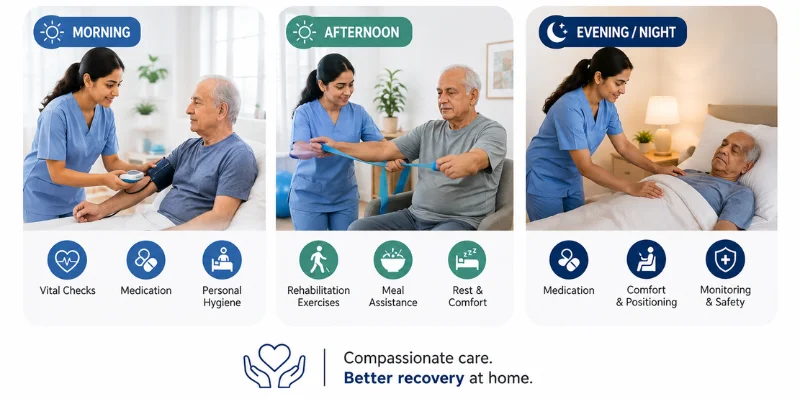
Every stroke patient has different care needs. Daily routines depend on symptoms, abilities, and medical requirements. A nurse can organize daily support around the patient’s prescribed care plan.
Morning
The morning may begin with prescribed vital checks and basic observations. The nurse can assess the patient’s comfort while following the care plan. Morning medicines should follow the prescribed dosage and timing. Personal hygiene may come next. The nurse can assist with bathing, dressing, toileting, and oral care. Safe movement also matters when helping the patient get out of bed.
Afternoon
Afternoon care may include prescribed exercises or rehabilitation activities. Nurses can assist according to instructions from the healthcare team. Any changes to exercises or treatment should follow professional guidance. Meals also require careful attention for patients with swallowing difficulties. The nurse should follow recommended food textures and feeding techniques. Rest periods can be included based on the patient’s needs.
Evening/Night
Evening care may focus on prescribed medicines, hygiene, and comfortable positioning. Nurses should follow the medication schedule without changing prescribed doses. They can also assist with safe transfers when required.
Older stroke patients may need additional help with everyday activities. An elderly care service in Ranchi can provide suitable daily assistance and support families with routine caregiving needs.
Before bedtime, the nurse can help prepare the patient for comfortable rest. The prescribed care plan should guide any required positioning or monitoring. A flexible routine can make home care more manageable for families. The next section explains the different types of home nursing support available for stroke patients.
Different Types of Home Nursing Care
There is a range of post stroke support available once a patient leaves the hospital. This includes services providing clinical care as well as those offering assistance with the activities of daily living. The appropriate service will depend upon your individual circumstances.
Skilled Nursing Care
Skilled nurses provide home nursing care in Ranchi under professional medical guidance. Their work may include prescribed medication administration, wound care, injections, and vital monitoring. They follow instructions from the treating healthcare team. They do not independently diagnose conditions or change medicines or treatment plans.
Personal Care Support
Some patients mainly need assistance with everyday activities. Caregivers can help with bathing, dressing, grooming, toileting, and safe mobility. This support can also provide companionship and routine supervision. It can be especially helpful when families cannot provide constant assistance.
Post-Hospital Care
After hospital discharge, patients and their family may face newly developed challenges. Patients often require assistance in management of prescribed medications, diet orders and routine schedules. Most families often seek how to recover from stroke quickly at home. However, there is no specific timeline for stroke recovery to happen. As it depends on stroke severity, general health and rehabilitation process of the individual, etc.
Rehabilitation Support
Physiotherapy, speech therapy and occupation therapy are all part of the rehabilitation process that qualified therapists design for individuals. Caregivers play an important role in managing prescribed exercise regimes and therapy sessions according to professional direction. It should not be changed independently.
Long-Term Support
Some patients continue needing assistance because of lasting physical or functional difficulties. Long-term support may include personal care, mobility assistance, and safety supervision.
Understanding these care options helps families choose appropriate support. However, home nursing cannot replace proper medical treatment. The next section explains stroke treatment options and the role of professional medical guidance.
Best Treatments for Stroke Patients
A stroke treatment depends on the type, severity, duration, and a person’s general health. It initially depends on the cause of the stroke (a blood clot or bleed), then based upon the overall condition. Brain imaging will help a physician on the exact location and amount of injury to an affected side of the brain to make the appropriate plan for your case.
Emergency Treatment
A suspected stroke requires immediate emergency medical evaluation. Warning signs include sudden weakness, facial drooping, speech difficulty, confusion, or other sudden neurological changes. Knowing how to manage stroke patient in emergency starts with seeking urgent medical care. Families should not attempt to treat a suspected stroke at home.
For eligible patients with clot-related strokes, doctors may use clot-busting medicines. Some patients may also qualify for mechanical clot removal. Bleeding strokes require different medical management.
Recovery Support
A question that is regularly heard from families is “what is the best treatment for stroke”. Unfortunately, there is not one treatment for all patients. What type of recovery care the patient will receive at home largely varies depending on the stroke they have sustained. Home nursing care services come into play post-stroke care and will not substitute a doctor or a physiotherapist.
With appropriate medical guidance, families can plan safer home care and choose the best home nursing care for stroke patients in Ranchi.
Why Choose Griham Healthcare for Stroke Patients?
Choosing suitable home care becomes easier when families understand the services available. Griham Healthcare offers home health care services in Ranchi for patients with different care needs. Its services are designed to support daily care, recovery, and post-discharge needs at home.
- Trained professionals: Nurses and caregivers follow prescribed instructions and provide essential daily care support.
- Personalized care: Care plans can be adapted to the patient’s condition, recovery stage, and specific daily needs.
- Nursing support: Home nursing and post-discharge care are provided according to medical guidance and the prescribed care plan.
- Rehabilitation support: Physiotherapy can support prescribed rehabilitation goals under the guidance of qualified professionals.
- Flexible assistance: Families can discuss suitable care arrangements based on the level of support required.
Griham Healthcare can help families understand the level of home support needed after a stroke. The team can coordinate appropriate services based on the patient’s condition and prescribed care plan. This can help families maintain consistent care during recovery.
Getting Support at Home!
Stroke care can feel overwhelming after hospital discharge. Professional support can make daily responsibilities easier to manage.
Families in Ranchi can discuss the patient’s condition and care needs with Griham Healthcare. The care team can help identify appropriate nursing or caregiver support based on the prescribed care plan.
Whether the patient needs help with mobility, hygiene, medicines, feeding, or daily activities, consistent care can support a smoother recovery routine.
Families looking for home nursing care for stroke patients in Ranchi can explore services based on the patient’s individual requirements. Early planning can also help establish a more organised home-care routine.
Contact Griham Healthcare to discuss available services and arrange appropriate home care for a stroke patient.
FAQs
What home care nursing services are available in Ranchi?
Home nursing services in Ranchi include elderly care, wound care, injection, and post surgery care.
Can a stroke patient go back to normal life?
Yes, with timely treatment and rehabilitation, many stroke patients can return to a normal or near-normal life.
What is the best treatment for stroke patients at home?
The best treatment for stroke patients at home includes prescribed medicines, physiotherapy, speech therapy, proper nutrition and regular medical follow-ups.

No Comments