


13 Oct Family vs. Professional Caregiver: Which Is Right for You?
Looking after an ageing parent or loved one requires time, patience and genuine concern for everyday issues. It is natural for families to want to look after their loved ones themselves. But on occasions providing personal care, reminders to take medication, helping with mobility and daily appointments can be difficult.
This is where knowing the differences between family caregiver vs professional caregiver can help, both are valuable and experienced providing invaluable support and professional care. Choosing between family support and professional assistance depends on the health of your parents, your family’s routine and independence.
In this blog, we’ll explore how having a support system in place for your loved one can make all the difference. At Patna, you can count on a safe, caring environment for your elderly family members.
What Is a Family Caregiver vs. Professional Caregiver?
A family caregiver is an unpaid person in your family such as a relative or friend, who provides assistance to older adults with their everyday activities, personal needs, meal, transportation, personal care, emotional support etc.
Whereas a professional caregiver in Patna is a paid provider who delivers help to the seniors with personal care, mobility, reminders, meal prep, companionship etc, with ease. In some cases, they also provide transportation to the clients depending on what kind of travelling assistance they need.
Major Differences Between Family and Professional Caregivers
Although both types of caregivers have the same goal of improving your loved one’s quality of life, comparing family caregiver vs professional caregiver roles highlights several differences you need to know:
Training and Experience
Family caregivers often learn through experience and understand their loved one’s preferences, personality, and medical history. However, they may lack formal training in safe patient handling, mobility assistance, and recognising health changes.
A professional caregiver generally has training in managing daily needs and may be able to help with walking and mobility. As there are some fields that require specialist training, a family caregiver will need to verify the training of the individual or the qualification of the healthcare professional.
Daily Responsibilities
Family caregivers usually have a job and/or home responsibilities, in addition to providing personal care and other services. Food preparation, scheduling appointments and transportation, administering medicines and hygiene may be the responsibility of caregivers so that the elderly individual remains cared for 24 hours per day.
In-home professional caregiver service is given based on an approved care plan. Care duties might encompass personal hygiene, meal preparation, help walking, and companionship. Additionally, few caregivers also offers light housekeeping and transportation when needed. In some instances, these precise responsibilities depend upon the senior person’s requirements as well as the training of the caregiver.
Availability and Consistency
Professional caregivers generally attend to their duties based on the time they have available. For instance, while some family members are able to be present all day with an elder, others have work commitments, which may make it hard for them to be there daily.
Regular visits by professional caregivers can usually be arranged; whether this is a few hours a day, overnight, or for a longer shift, with a preferred provider. Though, a trained caregiver for elderly in Patna can help to provide a more consistent routine for meals, dressing, movement and other daily living tasks.
Emotional Connection and Companionship
One of the benefits of having a family caregiver is the familiarity with the individual. There is less of a need to get used to a new person, and there is often a shared sense of familiarity and conversations. The individual will also have someone they can trust to open up to.
Professional care providers can keep an elderly person company with conversations, leisure activities, and walks if suitable, and help them with their day-to-day routines. While initially a professional relationship, the individual can become familiar with and trusting of the carer.
Cost and Financial Considerations
A family caregiver does not necessarily carry an upfront cost with their role. However, there are some indirect costs, especially if the care role has a negative impact on the work opportunities or careers of family members. These can include additional family expenses or the reduction of hours worked to fit in the role.
All charges will be different based upon the amount of time spent, level of care, caregivers’ qualifications, and other special needs. Full-day care or overnight care is more than an occasional visit, so it’s best to compare what the family’s budget may be before considering a service.
Flexibility and Caregiver Burnout
Can I make a career and have a family, and take care of a senior at the same time? Family caregiving can be a pleasurable experience, but it can also be physically and emotionally draining when it is constant, and no respite can be taken. Working and maintaining the household and meeting a senior’s needs takes a toll.
Hiring a patient care attendant for elderly allows families to share the burden of caregiving. Depending on their needs and budgets, families can hire help for a couple of hours at a time, during some activities or for a full day.
In general, both a family and a professional caregiver are essential and trusted roles. They can also complement each other to improve the lives of your loved ones.
Benefits of Family Caregiving vs. Professional Caregiver
Knowing the person you care for well and feeling close to them can also be reassuring, as well as increase insight into how best to meet the person’s needs. Family caregiving can also help to reduce direct costs of formal care services. However, family members may struggle with the challenges of juggling work and home responsibilities alongside caregiving.
You get structured help, professional aid in activities where it is appropriate, and peace of mind for loved ones highlighting the benefits of professional caregivers who can also provide families with respite. This has enormous value for a professional caregiver when a senior person needs help continuously with mobility, activities of daily living, or personal care.
The main challenges can be cost and learning to trust someone that is a stranger to your loved one. Ultimately, the best outcome is to work with a family caregiver that can benefit from working with a professional to provide the best care for your loved one.
When Should You Consider Professional Caregiver Services in Patna?
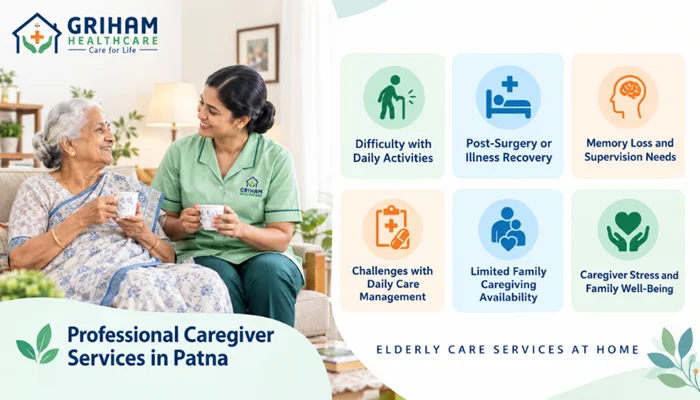
When the need for elderly care services at home arises where you can’t provide help to the full capacity, then it’s time to think about professional caregiving services.
- Your loved one struggles with bathing, dressing, eating, or mobility.
- Recovery after surgery or illness requires daily assistance.
- Memory-related difficulties require regular supervision.
- Managing medicines, meals, and personal hygiene becomes challenging.
- Family members cannot provide consistent care due to work or other responsibilities.
- Caregiving begins affecting the family’s health and well-being.
Quality elderly care services can help maintain seniors’ quality of life at an affordable price. While allowing them to remain in the comfort of their own homes. Question the training, experience and professionalism of the aide you wish to hire.
Professional Home Care Services in Patna for Your Loved Ones
Choosing the right caregiver can also make a big difference to your loved one’s comfort, safety, and quality of life.
At Griham Healthcare, we provide home healthcare services in Patna, assistance with patient care and activities of daily living, mobility support, medication reminders, and home nursing services for elders. Our caregivers and healthcare professionals are trained and experienced to offer services that are tailored to each individual’s unique needs so that elders are able to enjoy comfort at home.
If a family member needs help with everyday tasks or needs some help during the recovery period, we can help identify appropriate care options and arrange for loved ones to be cared for in the home.
Conclusion
The decision between a family caregiver vs professional caregiver depends on the health and independence of the loved one and the tasks that are needed on a daily basis. A professional caregiver has the experience of providing care and will be structured, while a family member’s relationship brings closeness. Neither is better depending on individual needs.
For many families, a combination of both traditional and professional caregiving may be the most feasible approach as they find a balance so that their loved one retains personal connections and family can still be present to help with difficult daily tasks.
Every senior has different care needs, so it’s important to choose support that suits their health and daily routine. Griham Healthcare helps families care for their ageing loved ones at home, making everyday life more comfortable while supporting their safety, dignity, and well-being.

No Comments