


17 Nov Home Physiotherapy After Stroke: A Guide to Better Recovery
A stroke is a life-altering experience for a person. Things like walking, standing, holding a glass, or even just getting dressed, which people normally take for granted, can suddenly become so difficult.
However, stroke patients who get medical care quickly can reclaim their independence and physical capabilities. In addition to that, physical therapy is one of the significant ways of assisting patients in this journey. Further, home treatment may be a good option for patients who find it hard to go out since it can be more relaxed for them.
Let’s explore how physiotherapy for stroke patients at home helps in recovery, and how professional advice makes life easier.
What Is Home Physiotherapy After Stroke?
The concept of home physiotherapy after stroke is the provision of physiotherapy services to patients at their home instead of making them come regularly for treatment at the hospital or clinic. The assessment of the person’s strength level of muscles, balance, movement control, and coordination is carried out by a certified physiotherapist.
Furthermore, home physiotherapy for recovery allows patients to practise familiar activities in the surroundings where one lives. With this, a person can more practically reach targets like getting up from a bed, accessing the toilet facilities, and walking with safe footing.
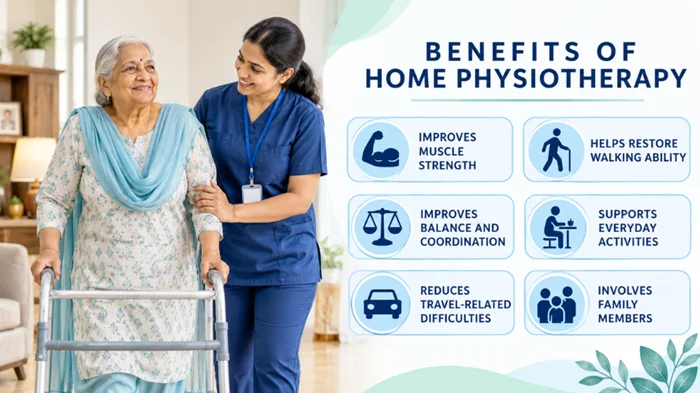
6 Benefits of Home Physiotherapy After Stroke
Recovering from a stroke takes time, patience, and regular practice. However, a structured rehabilitation programme can help patients work towards meaningful improvements.
Here are six ways home-based physiotherapy can support recovery.
1. Improves Muscle Strength
A stroke might weaken the muscles on one side of the body, which makes simple actions hard. People might be unable to raise an arm, shift a leg, or steady themselves.
Under the guidance of a therapist, stroke physiotherapy exercises allow patients to slowly regain muscle strength and the ability to control their movements.
Depending on their abilities, therapists may recommend:
- Gentle arm and leg movements.
- Assisted joint movements.
- Supported sitting and standing.
- Gradual strengthening activities.
Stroke recovery at home becomes more effective with consistent practice and professional guidance. Over time, these exercises can help patients regain better movement control and perform daily activities with greater confidence.
2. Helps Restore Walking Ability
After stroke, many people experience walking problems. Different stroke patients have different problems, but some cannot keep good balance, their muscles are weak, or their coordination is bad so they cannot walk properly.
The physiotherapist will decide, based on the patient’s condition, what type of walking exercises will be appropriate.
At the beginning stages, the patient might be asked, for instance, to sit and stand, shift body weight etc. Later on, the therapist introduces the patient to walking with support and steps.
In the meantime, the therapist may also check whether the walking device is needed and recommend one, if that is the case. The more they work at it, the better they get at moving without hurting themselves and the more independence is achieved.
3. Improves Balance and Coordination
Poor balance can actually raise the risk of having a fall following a stroke. A moment of balancing oneself while standing might already be an enormous effort and challenge as well.
A therapist may introduce exercises such as:
- Supported standing activities.
- Controlled weight shifting.
- Sitting balance exercises.
- Guided reaching activities.
- Safe stepping practice.
Through such activities patients are able to enhance their awareness of their bodies and control of movements. Nevertheless, it should be clear to the caregivers that they should never encourage standing or walking of a patient in an unsupported way.
4. Supports Everyday Activities
Stroke recovery involves more than restoring muscle strength. Patients who suffer strokes also have to be able to use their bodies to carry out common physical activities.
Therapists might, for instance, work with stroke patients to demonstrate techniques and practices needed for daily activities such as getting up from the bed, moving around in the room, getting into different postures, reaching for different items, and even making a safe stand with the feet firmly placed.
In addition, stroke physiotherapy management is centered on enabling people to perform physical activities that will serve well their goals of recovery.
5. Reduces Travel-Related Difficulties
Visiting a hospital or rehabilitation centre is quite burdensome, for someone with restricted freedom of movement. Moreover, it might involve the help of other family members. Treatment sessions at home take away the hassle of constant travel. Rather, the clients are advised by the experts in their own surroundings.
For elderly patients and those with significant movement difficulties, physiotherapy at home in Patna can make regular rehabilitation more manageable. Along with this, physiotherapists are able to observe and warn against any domestic dangers that may hinder the flow of the walkway.
6. Involves Family Members
Support at home can play an important role in stroke rehabilitation. Nonetheless, caregivers sometimes find themselves in a dilemma about the right way to help a stroke patient without making him feel uncomfortable or even causing injury.
They may guide caregivers on:
- Helping patients change positions safely.
- Supporting prescribed exercises.
- Preventing unnecessary strain on weak limbs.
- Recognising fatigue and discomfort.
- Maintaining a safe home environment.
Consequently, families become more confident while supporting the patient’s rehabilitation journey.
Each of these benefits depends on the patient’s medical condition, recovery stage, and consistency with the prescribed programme. So, what actually happens when a physiotherapist visits home?
What to Expect During a Home Physiotherapy Session?
A typical home physiotherapy session starts with the physio looking at how the patient is currently able to move his/her physical body. The therapist looks at muscle strength, joint movement, balance, coordination and mobility.
After this they decide what exercises the patient will best get on with and show them step by step the right way for doing each of them. They keep the patient comfortable and well rested all the while and keep track of the progress being made with each exercise.
As the patient becomes stronger his/her treatment programme could change. Griham Healthcare says its home visits for physiotherapy typically take between 45 minutes and an hour depending upon the specific treatment programme.
Family members might also be taught techniques to keep the prescribed exercises going at home on those nights without the therapist.
Can You Return to Normal After a Stroke?
Many persons who have had a stroke become active again and are able to lead a productive life. Of course, recovery differs from one to another.
The result of recovery depends on such things: the seriousness of the stroke, the part of the brain that was affected, and the medical condition that the patient came into hospital with. The consistency with which a person continues to undergo rehabilitation is also a major determining factor in the outcome of the recovery.
Therefore, having achievable goals and seeking help from experts is of more importance than seeing one’s progress with that of someone else’s recovery.
Professional Home Rehabilitation With Griham Healthcare
Seeking trustworthy support for rehabilitation can ease the recovery road not only for those seeking treatment but also for their relatives. Griham Healthcare, a provider of excellent home healthcare, also includes physiotherapy in their portfolio of treatments at Patna.
The organisation highlights several features of its home physiotherapy services:
- Certified and trained physiotherapists.
- Personalised treatment plans.
- Home-based neurological rehabilitation.
- Regular assessments and progress monitoring.
- Portable equipment for home sessions.
If you’re looking for home care services in Patna alongside professional rehabilitation support, Griham Healthcare offers multiple home healthcare options.
Help Your Loved One Move Forward
Stroke recovery can feel overwhelming, especially when familiar activities suddenly become difficult. However, the right rehabilitation programme, regular practice, and family support can help patients work towards greater independence.
Physiotherapy for stroke patients at home offers a convenient way to receive professional guidance without frequent hospital visits. Most importantly, every patient deserves a treatment plan that respects their abilities, comfort, and recovery goals.
Start by consulting a qualified physiotherapist at Griham Healthcare and discussing the most suitable rehabilitation approach for your loved one.

No Comments