



30 Oct Why Companionship Matters for Senior Citizens?
Growing older should never mean spending most of the day without someone to talk to. Yet, many senior citizens experience loneliness as their families become occupied with work and other responsibilities.
Some live alone, while others gradually lose contact with friends and familiar social circles. Although physical assistance helps them manage daily activities, emotional connection matters just as much. A friendly conversation, shared meal, or short evening walk can make a meaningful difference.
Regular interaction also gives older adults something to look forward to. Therefore, companion care for seniors should address emotional and social needs alongside physical comfort.
Understanding Companionship in Old Age
Companionship means being with a person and spending some good time talking and doing simple things together. Senior citizens benefit a lot from this as it keeps them active.
But a good companion does more than just keeping the elderly company. They have to be patient and interested enough to truly care about what the person has to say. A great companion may sit and chat, share board game sessions, sit and watch the news or simply be a walk-mate. Through such simple interactions they add life to the elderly day to day life.
In contrast to the assistance, senior citizen care at home covers the mental, emotional, social aspect of the person. It is the kind of care that makes one feel appreciated, respected, and valued.
Signs Seniors Need More Companionship
Not every senior openly discusses loneliness. Sometimes, their behaviour reveals that they need more interaction and emotional support.
Families should pay attention to these common signs:
- Frequent boredom: Often complains about having nothing interesting to do.
- Social withdrawal: Avoids conversations, gatherings, or activities they previously enjoyed.
- Changes in mood: They appear unusually sad, irritated, or uninterested in everyday activities.
- Reduced communication: Rarely initiate conversations or contact family members.
- Loss of interest: Stopped enjoying hobbies, reading, gardening, or outdoor activities.
You may notice signs that don’t point to any physical illness at all. But are just part of getting old, or maybe even just personality traits.
Still, if behaviour shifts become significant, they definitely call for some investigation. And think about what they can be doing to make a difference and raise the quality of living of their particular family member.
Benefits of Companionship for Senior Citizens
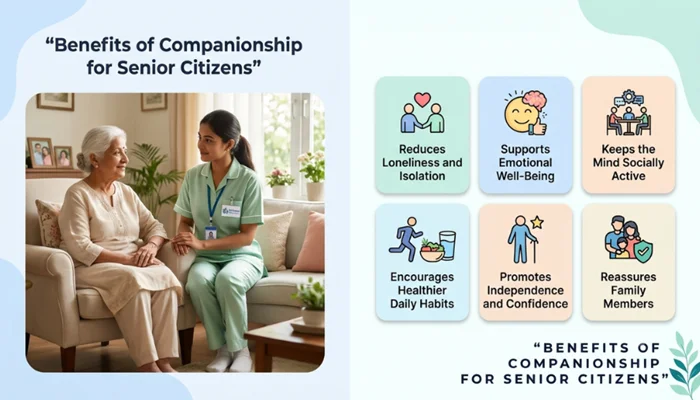
Companionship is linked to multiple aspects of healthy aging. Apart from reducing loneliness, seniors who are regularly socially active may also enjoy enhanced everyday life experiences.
Here are some important benefits of home healthcare services in Patna:
1. Reduces Loneliness and Isolation
Retirement, losing friends, and living away from family can significantly reduce one’s social life. That is why some elderly people can end up being very isolated, often not having a single conversation for a long time without any interruption.
People who have someone around to interact with find opportunities to express their ideas, reminisce about the past. An example of that could be an elderly relative, morning-tea caller, or someone who checks on the elderly. In the same way, a conversation about family matters or even favourite television programmes can give a lot of pleasure during an otherwise dull afternoon.
It is these types of social situations that can make elderly people feel that they are still part of society even after so many years of age.
2. Supports Emotional Well-Being
Aged people experience deep changes personally as time goes on. Elders might be caught up with issues like retirement and losing independence, physical limitations, or being left without family or close friends. During such times, it would be nice for a person or relative to listen closely.
Having someone who can be relied upon and talked to will enable an older person to talk about his or her worries safely without being interrupted. Besides, going over regular events together might also remind them that they matter. Families can build that bond through visiting regularly, making calls, and doing things that you both like to do.
On the other hand, if sorrow, fear, or other emotions continue for a long time, professional mental health intervention might be necessary.
3. Keeps the Mind Socially Active
Seniors who are engaged in meaningful conversations reminisce about their past, voice their opinions, and share knowledge as well. Furthermore, it is through pleasant activities that a person’s mental engagement does not get reduced.
Companions can introduce simple activities such as:
- Playing chess, cards, or familiar board games.
- Reading newspapers, books, or interesting stories together.
- Discussing childhood memories and family experiences.
- Solving puzzles and playing word games.
- Listening to music and sharing favourite songs.
- Exploring hobbies that seniors previously enjoyed.
These activities make everyday interactions more interesting. They also encourage older adults to participate rather than spend the entire day passively. Although social engagement supports mental stimulation, it cannot guarantee protection against dementia or memory-related conditions.
4. Encourages Healthier Daily Habits
It might get tough for the senior folks to stick to the routine if they are alone most of the time. As a result of which their life starts looking uninteresting and they tend to skip meals, delay activities, and even forget about the basic responsibilities of life.
For example, they can accompany seniors during suitable walks, encourage regular meals, and remind them about scheduled activities.
Some useful daily practices include:
- Following consistent meal and sleeping schedules.
- Drinking sufficient water throughout the day.
- Participating in suitable physical activities.
- Maintaining personal hygiene and grooming routines.
- Following medication schedules with appropriate reminders.
Professional elderly homecare is the perfect way for people to enjoy company, at the same time receiving physical/laundry assistance. Still, there should be medically licensed professionals delivering the medicine and monitoring the health condition of a senior.
5. Promotes Independence and Confidence
Ageing need not imply relinquishing your right to self-determination. Numerous older generation people just wish they could go on managing their lives and making their own small daily decisions.
In contrast to just forbidding going out of the house or even the house itself, a companion may go with their companion to the local park, for instance. Similarly, a companion can help a senior to choose and engage with leisure activities at a speed that pleases them, not the other way around.
Home care services for elderly that have been customized to fit their needs can be the perfect support in a responsible way. Additionally, home nursing over hospital stays may offer comfort and familiarity when hospital admission isn’t medically necessary.
6. Reassures Family Members
Family members usually face the challenge of managing their job, taking care of the house, and also finding leisure time. They just don’t have time to spend with their elderly parents for the whole day. The lack of presence can be a cause of anxiety especially for elders living alone.
Having somebody else over, especially a companion, can be of great benefit as a form of companionship. In the meantime, a companion may detect the subtle signs of the senior, which are the changes in habits, mood, and general behavior.
Additionally, senior care at home can incorporate both direct family participation and professional expertise. Such a mode of care ensures that the elderly continue to benefit from personal interaction effectively.
How Griham Healthcare Supports Seniors at Home?
Families seeking professional assistance can consider Griham Healthcare. The organisation provides personalised elder care in Patna. Its caregivers support seniors with everyday requirements while respecting their comfort and independence.
Its services include:
- Assistance with bathing, grooming, dressing, and feeding.
- Walking assistance, mobility support, and fall prevention.
- Medication reminders and routine monitoring.
- Bedside assistance and personal hygiene support.
- Emotional companionship to reduce loneliness.
- Customisable care plans based on individual requirements.
Griham Healthcare gives customers an option of various care plans, such as eight-hour work periods and being available with patients at night. Families exploring elderly care services in Patna can contact its team to discuss suitable care arrangements.
Give Your Loved Ones More Than Care
Losing a human connection should never be a part of becoming a senior citizen. Aged citizens deserve talks, affection, emotional backing, and the chance to get involved in everyday hobbies, and fun.
Families can make a difference through regular visits, phone calls, shared hobbies, and thoughtful conversations. However, professional assistance can help when personal commitments limit their availability. Consider professional support when your loved ones need additional attention and companionship.
Explore Griham Healthcare’s home healthcare services in Patna to discuss suitable care arrangements. Give your ageing parents the attention, dignity, and companionship they deserve.

No Comments