



10 Jul How Can a Caregiver Provide the Best Care for Bedridden Patients at Home?
Attending a bedridden loved one at home requires you, a certain level of patience, and the right knowledge. Taking care of a person who has been bedridden whether recovering from a medical procedure, suffering from any serious disease or due to their ageing conditions may make them more susceptible to developing other problems like pressure sores, or other infections.
However, with the right type of care, many such problems may be avoided. There are numerous aspects involved in providing home care to a patient in bed that can improve their condition.
Having a proper home care may prove to make their environment comfortable, dignified and safe, so as to aid a quicker recovery.
In the blog, we outline the different things that a caregiver does to ensure their patients’ well-being while in home care.
Bedridden Patients Care vs Regular Caregiving
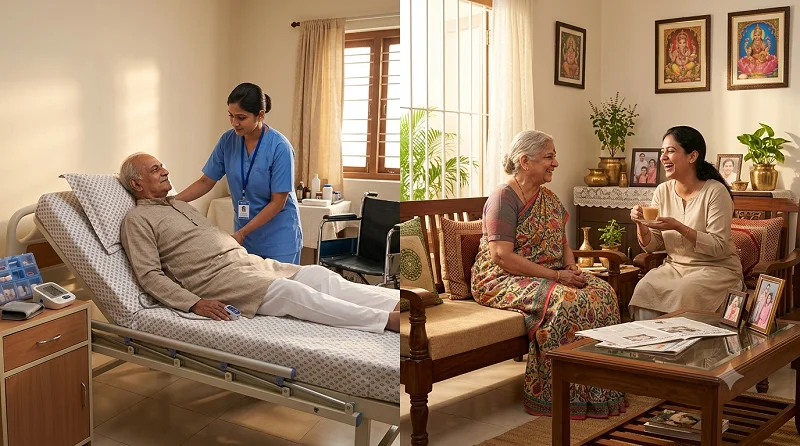
Taking care of bedridden patients isn’t the same as helping an elderly patient with daily tasks around the house. The risks are sharper here. And they show up faster than most families expect, honestly, faster than feels fair sometimes.
- Pressure sores can develop within just a couple of hours of an unchanged position
- Muscles weaken noticeably within a week or two of complete inactivity
- Infections, particularly chest and urinary infections, become far more likely
- Emotional isolation creeps in quietly, often unnoticed until it’s already taken hold
Above exposure isn’t meant to scare anyone, truly. It’s meant to explain why care of bedridden patients’ needs an actual structured routine, not just good intentions stretched thin across an already exhausting day.
So, what does that structure exactly look like, day to day?
Essential Bedridden Patient Care Tips
There are a few habits that (if done consistently) can prevent most of the serious complications bedridden patients tend to face.
- Repositioning the patient consistently every 2 hours. No exceptions.
- Keeping skin clear and dry, especially around pressure points like heels, hips, and the lower back
- Have to check bedsheets regularly for wrinkles or dampness that can be irritating.
- Encouraging small amounts of movement, even just arm or leg stretches, as long as the patient’s condition allows.
Special equipment is not required for any of these steps. What truly matters is consistency and a caregiver with the energy to provide steady support. That can be challenging on many days.
Caring Manners That Can Prevent Bedsores
Ask any nurse about the biggest concerns for bedridden patients, and bedsores are likely to top the list. They are painful, slow to heal, as well as largely preventable, which makes them especially frustrating.
- Proper home nursing care for bedridden patients treats bedsore prevention as a daily priority, not an occasional check.
- By putting pressure-relieving mattress or foam cushioning under bony areas significantly reduces the risk.
- Skin should be checked at least once a day for redness or early warning signs.
- Moisture from sweat or incontinence needs handling quickly, since damp skin breaks down faster than dry skin does.
That little spot of redness might seem like a minor annoyance but is more commonly an early warning sign of a pressure sore. Catch it now and a small bit of irritated skin won’t escalate into a weeks (or months) long painful injury.
That’s how seasoned home nursing professionals do their check on your loved one’s skin; seeing the warning signs before they become a real problem.
Nutrition And Hydration: Easy To Overlook, Hard To Recover From
Appetite often declines once someone becomes bedridden. During a busy day, it is easy to overlook, just another task on an already long list. But it deserves attention.
- Smaller, more frequent meals tend to work better than three large ones
- Rich sources of protein support skin healing and slow down muscle loss
- Adequate fluids prevent constipation and reduce the risk of urinary infection
- A dietician’s input becomes genuinely valuable for patients’ managing diabetes, kidney issues, or swallowing difficulties
The results of bad care do not show up all at once. In fact, symptoms typically show up as extended healing time, recurrent infections and generally poor patient condition. Patients can end up weakened and unable to move around or maintain independence as they would have with the right care.
What Home-Based Patient Care Services Actually Cover?
Family caregiving handles a lot. But it can’t replace clinical expertise, and pretending otherwise puts patients at real risk, no matter how much love is behind the effort, and there usually is a lot of love behind it.
- Medication management in home care typically includes trained nurses for wound dressing and catheter care
- Physiotherapists who help maintain joint mobility and slow down muscle deterioration
- Vital sign monitoring, catching early warning signs before they spiral into emergencies
- Coordination with the patient’s existing doctor, so care stays consistent instead of scattered across different people
When it’s time to care for a family member post-spine surgery at home, family is amazing. The loving care and attention a loved one can provide can make a world of difference.
However, proper wound care from trained professional, or expert physiotherapy assistance can often speed recovery times much more efficiently than bed rest can alone. Expert caregivers know just how to provide the care needed to encourage healing, while limiting potential issues.
Finding a Reliable Home Elderly Clinic In Patna
For families in Patna balancing work, children, and the care of a bedridden parent or grandparent, professional support is rarely a luxury. More often, it is what helps the entire household keep going.
- Searching for best home nursing care in Patna usually comes down to finding caregivers who are genuinely background verified and clinically trained
- 24/7 availability matters, since complications with bedridden patients rarely wait politely for convenient hours
- Transparent pricing avoids the added stress of unexpected costs during an already difficult stretch
- Personalized care plans matter more than generic packages, since no two bedridden patients need exactly the same thing
This is exactly where a name like Griham Healthcare, becomes genuinely worth knowing about, if you’re in Patna and looking, even just to have the number saved for later. They provide skilled nurses, GDAs, and physiotherapists for home care, along with home ICU setups for patients who need round the clock, high dependency monitoring without an actual hospital stay.
The Hidden Cost of Caregivers’ Efforts
Somewhere in all this focus on patients, caregivers have a way of disappearing from the conversation entirely. That’s a mistake. An easy one to make, too, without even noticing you’re making it. Exhaustion. Guilt. Isolation. All of it shows up constantly among people caring for a bedridden family member.
And burnout doesn’t just hurt the caregiver alone, it eventually affects the quality of care the patient receives too, whether anyone means for that to happen or not, and almost nobody ever means for it to.
Asking for help, whether that’s a few hours of professional support each week or something longer term, isn’t giving up. Not even slightly. It’s honestly what keeps both people in this situation okay.
FAQs
How can a caregiver help a bedridden patient?
Caring for a bedridden patient involves comprehensive support, including hygiene, feeding, repositioning, pressure ulcer prevention, emotional care, and monitoring for medical complications.
Can bedridden patients recover mobility?
True, if the underlying reason allows it. With physiotherapy, assisted movements, good nutrition, and consistent care, many bedridden patients regain partial or even full mobility over time. Early intervention improves outcomes significantly.
How often should you turn a bedridden patient?
Every two hours, shifting a person lying in bed helps avoid pressure sores while supporting better blood flow.

No Comments