


06 Oct Effective Wound Care in the Elderly: 7 Tips for Healing
An injury that seems simple and may appear normal for an elderly individual can actually take more time to heal and develop complications. The reason being, the skin of elders becomes thin and fragile, and conditions such as lower mobility, diabetes, and other health issues impact the healing process.
This highlights the need for some tips for effective wound care in the elderly patients. Caring for a wound isn’t just changing a dressing; it’s an element of wound observation, pressure care, protection of fragile skin and recognition of early signs of infection. Following simple wound care tips for seniors can help caregivers manage these concerns and reduce avoidable complications.
In this blog we’ll go over some tips for improved wound healing and advise you when elders require professional wound care.
Why is Effective Wound Care Necessary in Elderly?
There are some special considerations in wound management in older adults, with the skin becoming thinner, less elastic and more fragile with ageing. Healing may also be delayed in conditions like diabetes, reduced mobility or circulation.
This tiny wound can also progress into a pressure wound or may be infected if left without treatment. In this case, elderly wound care includes observation, dressing, pressure, and using professional medical help in a timely manner.
7 Tips for Better Wound Healing
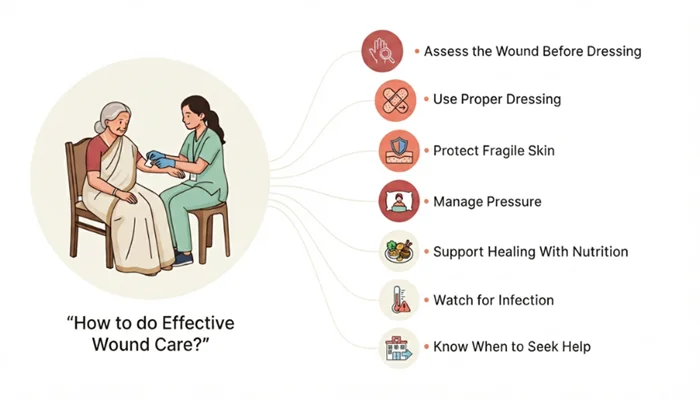
Managing wounds in the elderly patient involves far more than dressing the wound. Monitoring regularly, delicate handling, pressure awareness, balanced nutrition and early intervention, all contribute to a wound healing environment. Here are 7 tips on how to give safer wound care.
Assess the Wound Before Dressing
Always assess the wound rather than dress it immediately. Examine the wound for size, depth, colour, drainage, and the skin around the wound. Make a comparison between each dressing.
If the wound is deeper, there is a greater amount of bleeding or abnormal discharge, or is more painful, then professional advice should be sought. Carrying out regular assessment of wounds will help caregivers spot any problems earlier.
Follow the Right Dressing Technique
A clean dressing routine can reduce contamination and support healing. First, wash your hands before and after handling the wound, use the dressing recommended by a healthcare professional, and follow the advised changing schedule.
In addition, avoid touching the wound un necessarily or applying creams, powders, or antiseptics without guidance. Therefore, for families managing wound care dressing at home in Patna, professional nursing support can make regular dressing changes safer and easier.
Protect Fragile Skin From Further Damage
As people age, their skin becomes thinner and can tear or bruise more easily, especially when it is dry. Therefore, handle the skin gently while changing dressings, bathing, moving, or helping with transfers. Also, avoid rubbing the skin or pulling adhesive dressings off quickly.
In addition, keep the skin around the wound clean and dry. Use a suitable moisturiser on healthy skin if recommended by a healthcare professional. Gentle care can help prevent further skin damage and keep the older adult more comfortable.
Manage Pressure in Bedridden Seniors
Staying in one position for too long can put extra pressure on the skin, especially around the heels, hips, elbows, and lower back. Therefore, if an older adult spends a lot of time in bed or a chair, follow their recommended repositioning schedule.
At the same time, keep the bedding clean, smooth, and dry. Use pressure-relieving cushions or mattresses when advised. Most importantly, check areas under pressure regularly for redness, swelling, or other changes. These simple tips for effective wound care in the elderly patients can support early healing and help prevent further skin damage.
Support Tissue Repair With Nutrition
The body needs enough food, protein, fluids, vitamins, and minerals to repair damaged skin. However, older adults may eat less because of poor appetite, illness, or difficulty chewing. Therefore, offer balanced meals with suitable protein sources and enough fluids, unless a healthcare professional has advised otherwise.
In addition, seniors with diabetes, kidney problems, or other long-term conditions may have special dietary needs. For this reason, home care for seniors with chronic illness should always be planned according to their individual health needs.
Watch for Subtle Signs of Infection
An infection does not always start with obvious pus or severe pain. Instead, look for changes such as increasing pain, warmth, swelling, spreading redness, unusual discharge, or a bad smell from the wound.
Furthermore, fever, weakness, confusion, or a sudden change in the older adult’s health should not be ignored. If these signs appear, avoid home remedies or simply change the dressing more often. Instead, contact a healthcare professional so the wound can be checked and treated properly.
Know When Home Care Is Not Enough
Home wound care can be helpful, but some wounds need professional attention. For example, seek medical advice if the wound is not improving, keeps reopening, becomes more painful, bleeds repeatedly, or shows signs of infection.
Similarly, extra care is needed when an older adult has diabetes, poor blood circulation, reduced feeling in the area, or limited movement. Avoiding home care mistakes, such as delaying treatment or using products without medical advice, can help prevent a small wound from becoming more serious.
These tips can make daily wound care easier and safer. However, every wound is different. If healing slows or you notice worrying changes, getting professional advice early can help prevent complications and support recovery.
Wounds That Need Extra Attention in Older Adults
Not every wound needs the same type of care. In some cases, age, limited movement, or an existing health problem can make healing slower. Older adults may need extra attention when they develop:
- Pressure wounds: These can develop when one area of the body remains under pressure for too long, especially the hips, heels, or lower back.
- Diabetic wounds: Reduced feeling and poor blood flow can make foot wounds difficult to notice and heal.
- Surgical wounds: These need proper cleaning, dressing, and regular monitoring during recovery.
- Chronic or non-healing wounds: Wounds that do not improve as expected may need professional assessment.
- Skin tears: Thin, fragile skin can tear easily because of minor friction, bumps, or accidental knocks.
Therefore, knowing what type of wound an older adult has can help caregivers understand when regular home care may not be enough and professional support may be needed.
Professional Wound Care at Home
Caring for an elderly person with a wound can become difficult when regular dressing, cleaning, and monitoring are required.
Griham Healthcare provides home nursing care in Patna, helping seniors receive professional support in the comfort of their homes. Trained nurses can assist with wound dressing, infection management, checking vital signs, medication support, and basic bedside care as advised by the doctor.
For families who need wound care dressing at home in Patna, Griham Healthcare offers personalised support for surgical wounds, pressure sores, and other injuries. As a result, families can manage regular wound care more conveniently while maintaining a consistent care routine.
Moreover, short- and long-term care options allow support to be arranged according to the older adult’s needs, making recovery easier to manage at home.
Conclusion
Proper wound care can make a big difference in an older adult’s recovery, comfort, and overall well-being. For this reason, good nutrition, gentle handling, pressure management, and early attention to infection signs are important for safer healing.
However, wounds that become worse, take too long to heal, or show signs of infection may need professional assessment. Following these tips for effective wound care in the elderly patients becomes easier when caregivers have the right guidance and support.
If professional help is needed, Griham Healthcare provides the best home nursing care services in Patna, including wound dressing and ongoing monitoring based on individual needs. With the right support, seniors can receive safer and more comfortable care while recovering at home.
FAQs
Here are answers to some common questions about tips for effective wound care in the elderly patients.
What vitamins help wounds heal faster?
Vitamins C and A, along with zinc, protein, and other nutrients, can support normal wound healing when included as part of a balanced diet.
What are five factors that can delay wound healing?
Diabetes, poor blood circulation, infection, poor nutrition, and smoking can all slow down the wound-healing process.
What are the 7 steps of wound care?
The seven basic steps include hand hygiene, wound assessment, cleaning, applying the right dressing, protecting the surrounding skin, monitoring for infection, and seeking medical help when needed.

No Comments